Brand Design Isn’t About a Logo
Here’s What It’s Really About.
Your business should look like the
level
you want to be hired at.
You already know your work is good. You've done the hard part. You've built something real, served real people, solved real problems. And yet something still feels off. Your website doesn't quite reflect what you do. Your Instagram looks different from your business cards, which look different from your proposals. People land on your site, poke around for a minute, and leave. Or worse, they reach out and immediately ask about your lowest price.
That disconnect?
It’s not a marketing problem —
it’s a brand design problem.
And it's more common than you'd think.
What Brand Design Actually Is
(and What Most People Get Wrong)
Let's start with what brand design is not. It's not a logo. It's not picking a color palette on Pinterest. It's not choosing a pretty font and calling it a day.
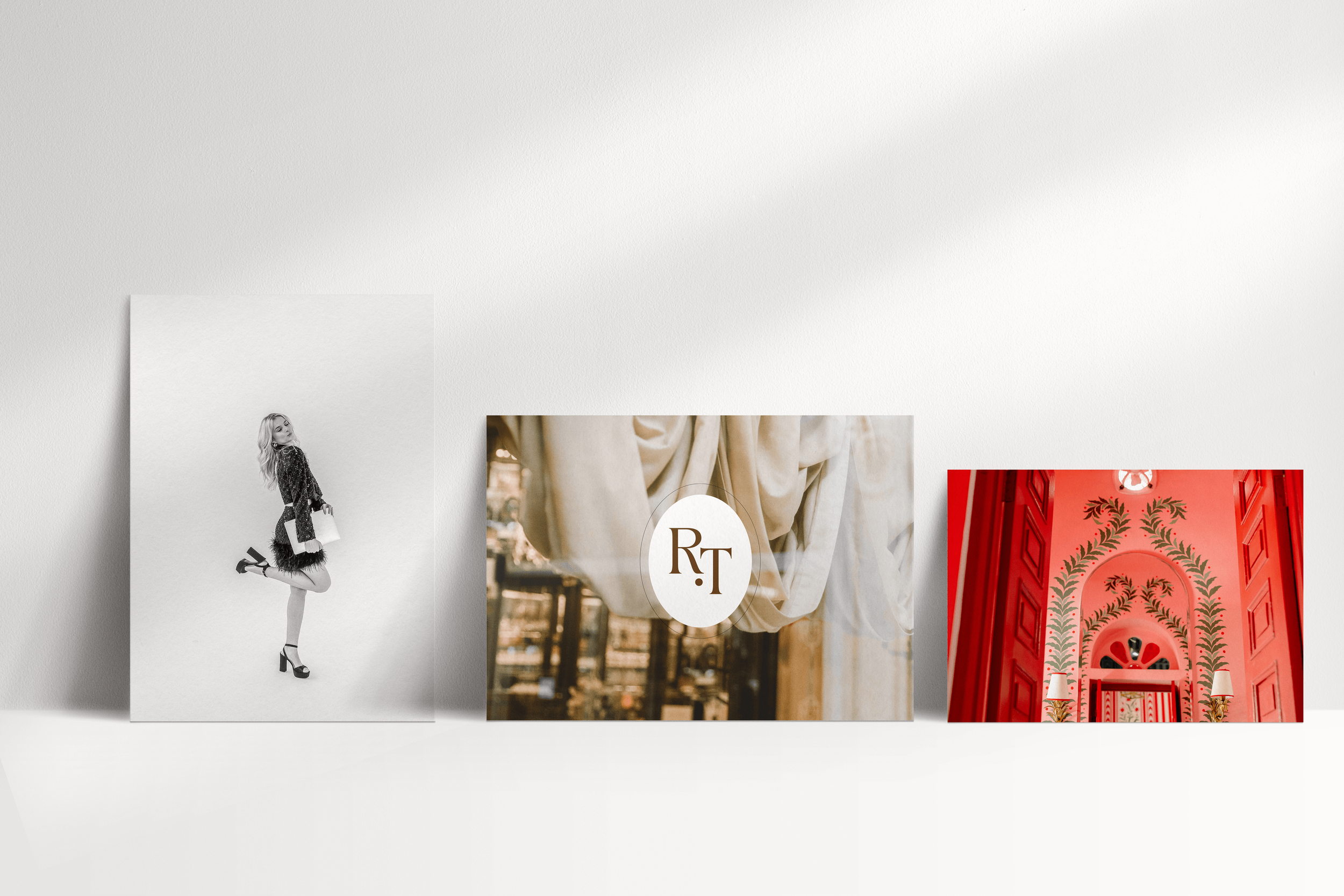
Brand design is the entire visual and strategic identity system that determines how your business shows up, everywhere. Your logo, yes, but also your typography, your color story, your imagery style, the way your website feels the moment someone lands on it, the way your proposals look when they hit a client's inbox, the way your Instagram grid reads as a whole. Every single visual touchpoint either builds trust or quietly erodes it.
When those elements are designed with intention, built around your positioning, your audience, and your goals, they work together like a system. They tell people who you are before you ever say a word. When they're cobbled together over time with no real strategy behind them, they send a very different message. Not a wrong one, necessarily. Just a confusing one. And confusion doesn't convert.
Brand Design Is About Perception, Not Decoration
Here's the thing nobody talks about on page one of Google when you search "brand design." Every article will tell you what elements are involved. Logos. Fonts. Colors. Great. But almost none of them will tell you what brand design actually does to your business.
It changes how people perceive you. Full stop.
I've been doing this for over 25 years, across wellness, real estate, architecture, retail, and creative services. The pattern I see over and over is this: a business owner is doing exceptional work. Their clients love them. Referrals come in. But they've hit a ceiling, and they can't figure out why. They're attracting the wrong kind of inquiries, or they're constantly justifying their prices, or they feel like they're competing with people who aren't even in their league.
Nine times out of ten, the issue isn't the quality of their work. It's that their brand design doesn't match it. The visual identity they're showing the world is telling a different story than the one they're living.
When someone encounters your brand for the first time (and that first time might be a Google search, an Instagram click, a referral link in a text message), they form an impression in seconds. Not minutes. Seconds. And that impression isn't based on your resume or your years of experience or your five-star reviews. It's based on how your brand looks and feels. Does it feel considered? Does it feel trustworthy? Does it feel like someone who charges what you charge?
That judgment happens before anyone reads a single word on your website. Brand design is the thing shaping that judgment, whether you've been intentional about it or not.
What Weak Brand Design Actually Costs a Business
I'm not here to scare you into a rebrand. But I do think it's worth being honest about what's at stake when your brand identity doesn't match the caliber of your work.
Here's what I've seen happen, across hundreds of client relationships:
You attract price-sensitive clients instead of the ones who value what you do. When your brand looks entry-level, it attracts entry-level buyers. Not because those people are bad clients, but because your visual identity is signaling a certain tier, and that's who responds. The premium clients, the ones who would happily pay your full rate without blinking, are scrolling past you because your brand doesn't look like it belongs in their world.
You end up "explaining" your value in every sales conversation. If your brand design were doing its job, much of that work would already be done before the inquiry even comes in. A strong brand sets expectations. It communicates credibility, expertise, and a point of view. It means you can spend the sales call talking about their goals instead of defending your pricing.
You blend in when you should be standing out. Every industry has a visual default. Real estate brands all look the same. Wellness brands all look the same. Coaching brands all look the same. And when your brand design follows the template everyone else is using, you disappear. Not because you're not talented, but because nothing about your visual presence is giving anyone a reason to pause and pay attention.
I had a client once, an incredibly talented practitioner who was booking luxury-level clients but had a visual identity that looked like a startup weekend project. Her services were premium. Her results were premium. Her brand was not. After we rebuilt her identity from strategy through execution, she raised her prices and heard zero pushback. That's not a coincidence. That's what happens when the outside finally matches the inside.


When Brand Design Matters Most
Not every business needs a full brand design investment right this second. But there are specific moments when it becomes the single most important thing you can do for your business.
You're launching something new. A new business, a new offer, a new direction. How you show up on day one sets the tone for everything that follows. Starting with a strong brand design means you're not spending your first year apologizing for a visual identity you've already outgrown.
You're repositioning. Maybe you started as a generalist and you've niched down. Maybe you've moved upmarket. Maybe your audience has shifted. If who you serve has changed, your brand needs to reflect that, because the brand that got you here isn't the brand that gets you there.
You've outgrown your DIY identity. There's nothing wrong with starting with a template and a Canva logo. Seriously. It gets you in the game. But there's a point where that identity starts working against you. You know you've hit it when you're embarrassed to send someone to your website, or when you avoid handing out your business card, or when your brand feels like a costume you're wearing instead of something that actually fits.
You're about to raise your prices. Pricing is perception. If your brand design looks like it cost $200, it's very hard to charge $5,000 for the services behind it. The investment in brand design often pays for itself the moment you feel confident enough to charge what your work is actually worth, and your clients don't question it.
You're ready to stop competing and start leading. There's a difference between being one of many and being the one people choose. Brand design is what creates that separation.
The Difference Between DIY Brand Design
and Strategic Brand Design
I want to be clear: this is not a Canva takedown. I use Canva. My clients use Canva. It's a tool, and it's a good one for certain things.
But there's a meaningful difference between assembling a brand from templates and having one designed around your specific positioning, your audience's psychology, and your long-term business goals. The first gets you something functional. The second gives you a system that works harder than you do.
Many of my clients come to me after years of DIY, and there's zero shame in that. They bootstrapped. They figured it out. They got to a place where the business was working but the brand wasn't keeping up. That's a sign of growth, not failure. It means you've built something real enough to deserve a real identity.
The difference shows up in the details. A strategically designed brand isn't just "prettier." It's more cohesive. It scales. It works across platforms and formats without losing its thread. It gives you a visual language you can hand to a social media manager, a copywriter, a printer, a web developer, and they all know exactly what your brand looks and sounds like, without you in the room to explain it.
That's the goal. A brand that works when you're not standing next to it.
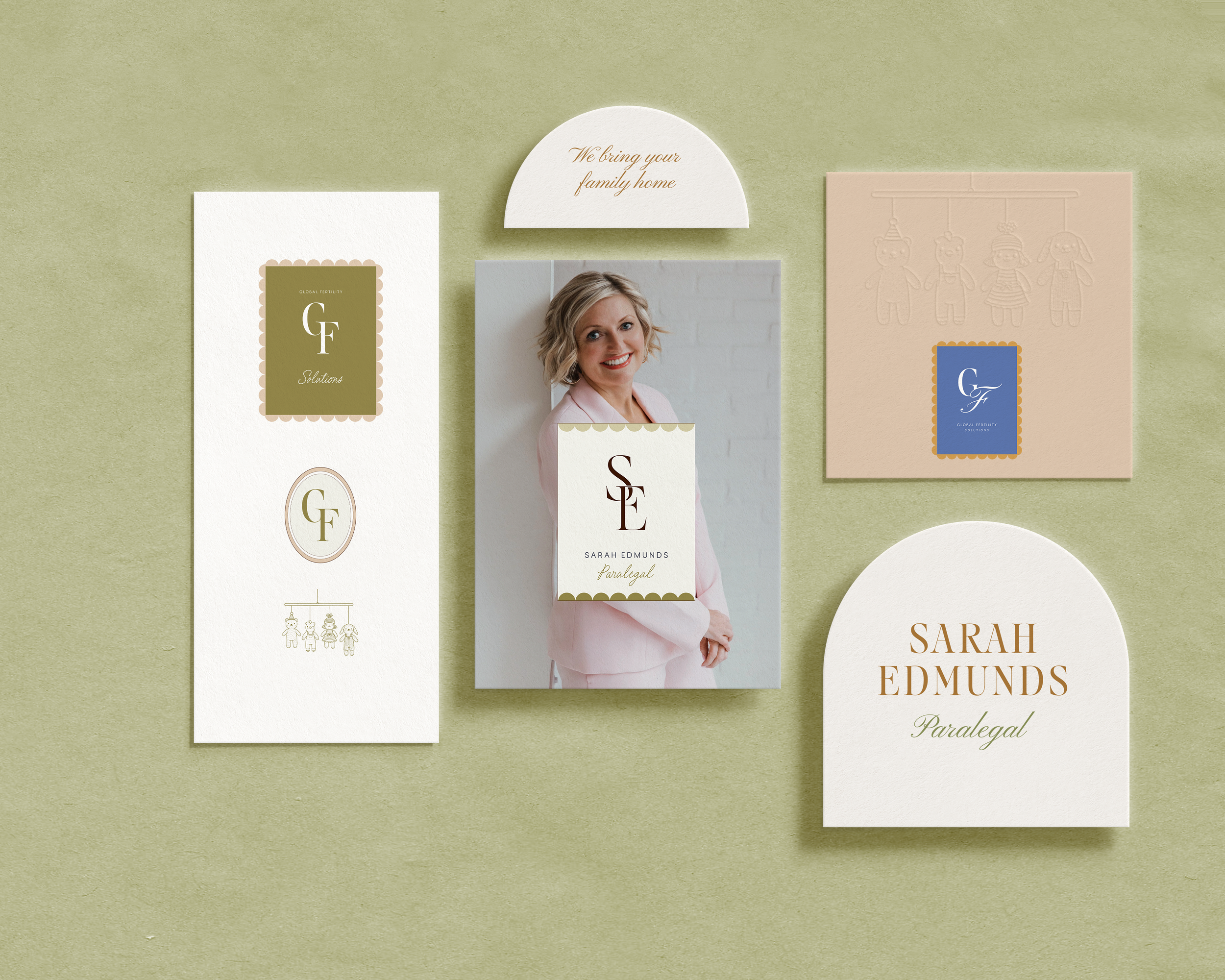
What a Brand Design Investment Actually Looks Like
If you've never worked with a brand designer before, the process might feel mysterious. It shouldn't.
It starts with listening. A good brand designer doesn't open Illustrator on day one. They ask questions. They learn what you do, who you serve, what makes your approach different, and where you want to be in three to five years. That discovery phase is the foundation everything else is built on. From there, it moves into strategy: positioning, messaging direction, visual direction. Then design: your logo system, color palette, typography, imagery guidelines, and the applications that bring it all to life, your website, your collateral, your social presence. Then refinement. Then delivery of a complete system, not just a folder of files.
The whole point is that when it's done, you don't have to think about it anymore. Your brand just works. You show up, and it does the rest.
Frequently Asked Questions

-
Brand design is the process of creating a complete visual identity system for your business, including your logo, color palette, typography, imagery style, and the way all of those elements work together across every touchpoint. It's not just how your business looks. It's how your business is perceived.
-
Brand design is the process of creating the visual elements. Brand identity is the broader system those elements belong to, including your voice, your values, your positioning, and the way your business shows up in the world. Think of brand design as the craft and brand identity as the full picture.
-
Because perception drives decisions. When a potential client is choosing between you and someone else, your brand design is often the thing that tips the scale. A cohesive, professionally designed brand signals credibility, expertise, and trustworthiness. It tells people you take your business seriously, which makes them take you seriously too.
-
It depends on the scope. A logo alone is one investment. A full brand identity system with strategy, design, web, and collateral is another. The range is wide, but what matters more than the number is what you're getting: a strategic system built around your business, not a template with your name on it. If you're curious about what it looks like to work together, start with a conversation.
-
A brand designer translates your business strategy into a visual system. That includes research, competitive analysis, creative direction, logo design, color and typography selection, brand guidelines, and often extends into website design, collateral, and digital presence. The best brand designers don't just make things look good. They make things work.
-
When your brand no longer matches the level of work you're doing. When you're embarrassed to send people to your website. When you're attracting the wrong clients or constantly defending your prices. When you're launching something new, repositioning, or preparing to grow. Any of those moments is the right moment.
-
You can absolutely start on your own, and many successful businesses do. But there's a ceiling to what templates and self-directed design can accomplish. When you're ready for a brand that's built around your specific business, your audience, and your goals (not a generic template that dozens of other businesses are also using), that's when a professional brand designer becomes worth every penny.

Ready to Close the Gap?
If your work is strong but your brand isn't keeping up, let's fix that. I'd love to hear where you are, where you're headed, and what's standing in the way. Let's talk about what your brand could look like when it finally matches the business you've built.